
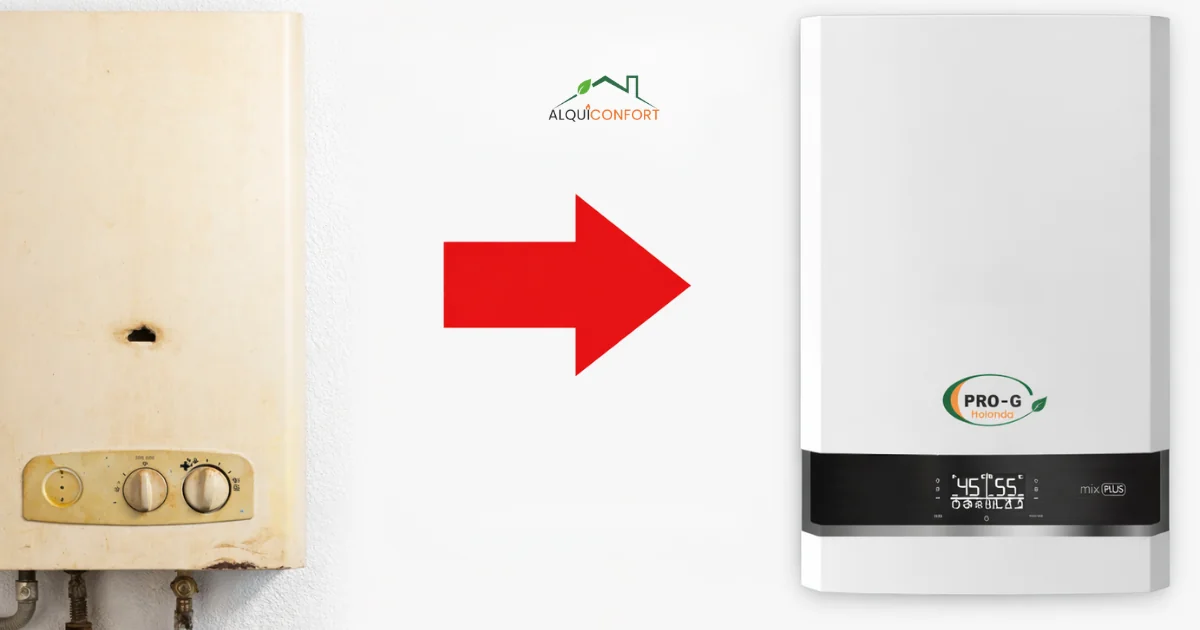
When is it necessary to replace a boiler?
The boiler is one of the most important systems in a home. Hot water and heating depend on it—two key elements for daily comfort.
However, many people only consider replacing their boiler when it stops working. The problem is that when that moment arrives, it usually involves emergencies, unexpected expenses, and a lack of time to compare options.
The good news is that your heating system usually gives you signs before it fails. Catching them early can help you avoid costly breakdowns and improve your home’s energy efficiency.
Here are 5 clear signs that it might be time to replace your boiler.
1. Your boiler is more than 10-12 years old
Most gas boilers have an average lifespan of between 10 and 15 years. From that point on, they begin to lose efficiency and the likelihood of breakdowns increases.
Modern boilers, especially condensing boilers, are much more efficient and consume less energy. This means that even if it is working correctly, an old boiler could be generating unnecessary expenses on your gas bill.
If your system is already over ten years old, it is wise to start considering a replacement before it fails.
2. Your gas bill keeps increasing
Another very common indicator is a progressive increase in energy consumption.
Over time, the boiler’s internal components wear down, and the system loses efficiency. This causes it to require more energy to produce the same amount of heat.
New condensing boilers are designed to make better use of energy, which can lead to significant savings on consumption and an improvement in your home’s energy efficiency.
3. Your boiler breaks down frequently
When a boiler starts requiring constant repairs, it is usually a sign that it is reaching the end of its lifespan.
Each repair involves:
- Technician call-out fees
- Labor costs
- Replacement parts
In many cases, the total cost of multiple repairs ends up being more expensive than replacing the boiler.
Furthermore, a breakdown usually happens at the worst possible time: in the middle of winter or when you need hot water the most.
4. The hot water or heating is not working properly
If you notice any of these issues, your boiler might be warning you that it needs to be replaced:
- The water takes too long to heat up
- The temperature fluctuates constantly
- The pressure drops frequently
- The radiators do not heat up properly
These faults usually appear when internal components begin to deteriorate. A modern boiler offers greater stability, better performance, and much more consistent comfort in the home.
5. It has been a while since your last maintenance check
Regular maintenance is key to extending the lifespan of a boiler.
When a system goes years without service checks, problems are more likely to appear, such as:
- Dirt accumulation
- Worn-out parts
- Loss of efficiency
Additionally, inspections help detect small faults before they turn into major breakdowns. Having a system that includes technical maintenance and specialized assistance provides great peace of mind in the long run.
What to do if you detect signs that your boiler is failing
If you have identified one or more of these signs, it is probably a good time to consider replacing your boiler.
Today, there are much more flexible alternatives than traditional purchasing, allowing you to install a modern boiler without a large upfront payment.
With AlquiConfort, for example, you can choose to:
- Buy your boiler from €1,299 with a monthly fee of €14.95, which includes maintenance and an extended warranty.
- Rent a boiler from €24.95 per month, with installation, maintenance, repairs, and technical assistance included.
This way, your heating system will always be covered and working properly, with no surprises or unexpected costs.
Stay ahead of problems and gain peace of mind
Replacing your boiler before it fails is a smart decision.
Not only does it improve your home’s comfort, but it also allows you to reduce consumption, avoid breakdowns, and enjoy greater peace of mind for years to come.
If you think your boiler might need replacing, the first step is to learn about the available options.
With the right system, having an efficient boiler with maintenance included and professional technical assistance can be much easier than you think.